

 By
By If you’ve ever looked at a circuit diagram and wondered “Where does ground actually go?”, you’re not alone.
Ground is one of the most misunderstood concepts in electronics, especially for beginners.
I’ll break it down in a simple, real-world way.
What Is Ground in Electronics?
In electronics, ground (GND) is a reference point in a circuit.
It does not always mean the Earth.
It simply means “this point is considered 0 volts”.
All other voltages in the circuit are measured relative to ground.
Think of ground like sea level:
- A mountain is measured above sea level.
- A circuit voltage is measured above ground.
The Ground Symbol You See Everywhere
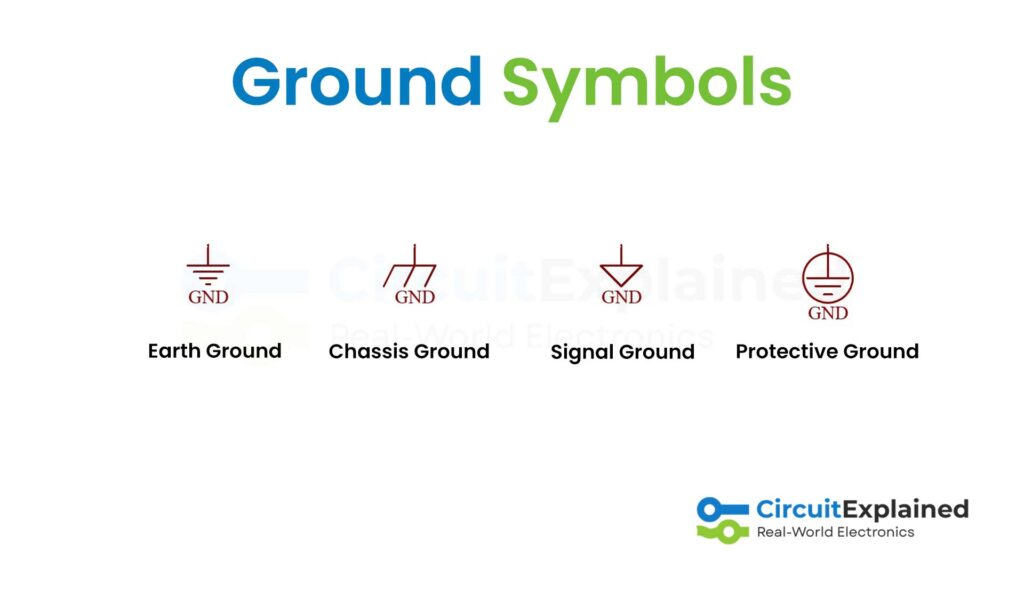
That three-line symbol does not magically connect to soil unless explicitly designed to.
Most of the time, it is just a common reference node.
Common Types of Ground (Very Important)
1. Circuit Ground (Most Common)
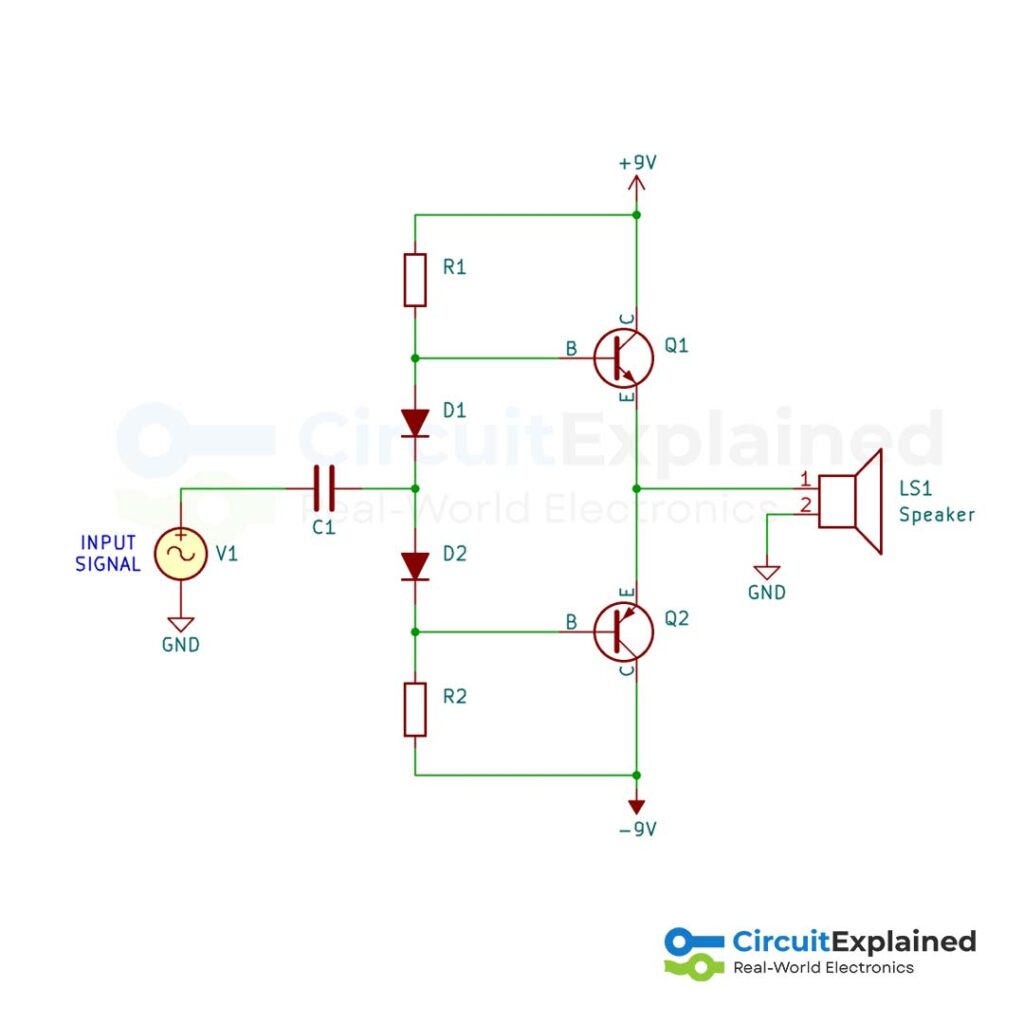
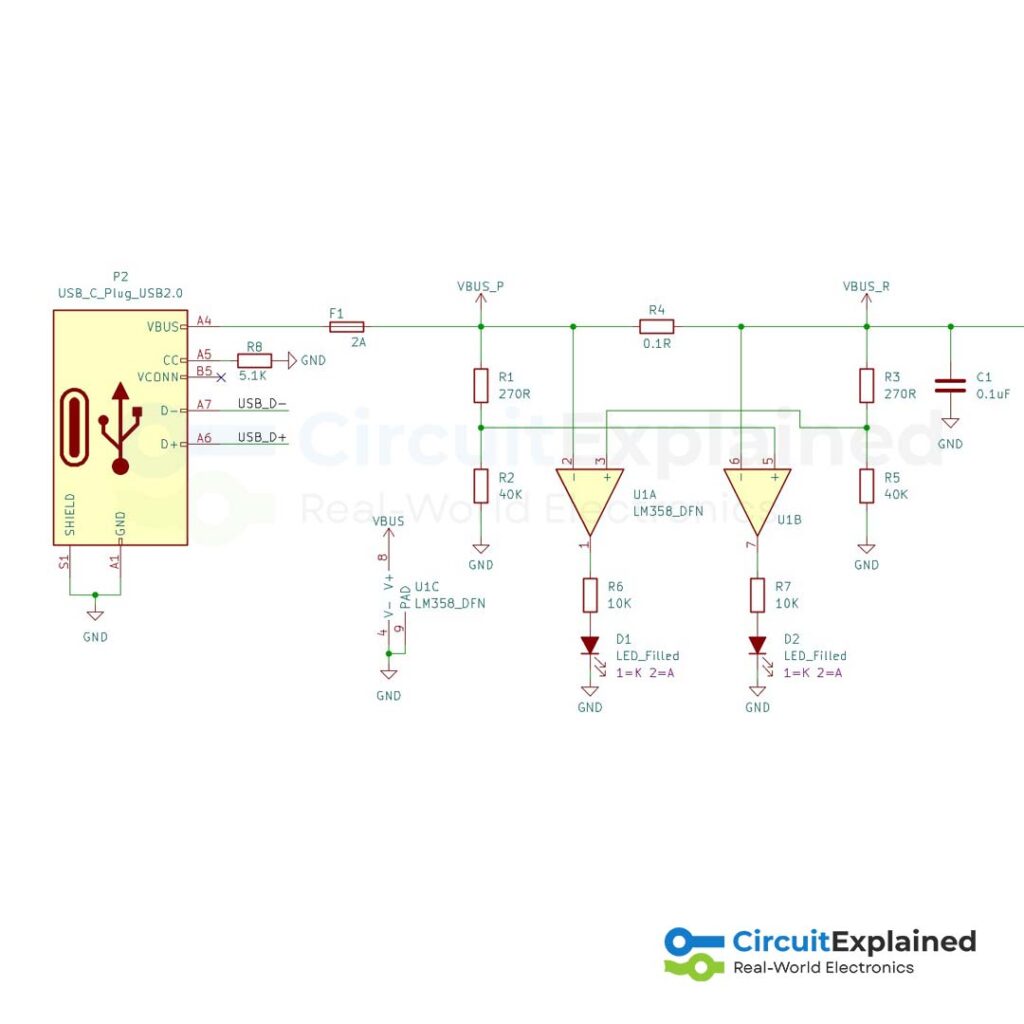
- Used in battery-powered and low-voltage circuits.
- Often connected to the negative terminal.
- Exists only inside the circuit.
- ESP32, Arduino, sensors, and breadboard projects use this type.
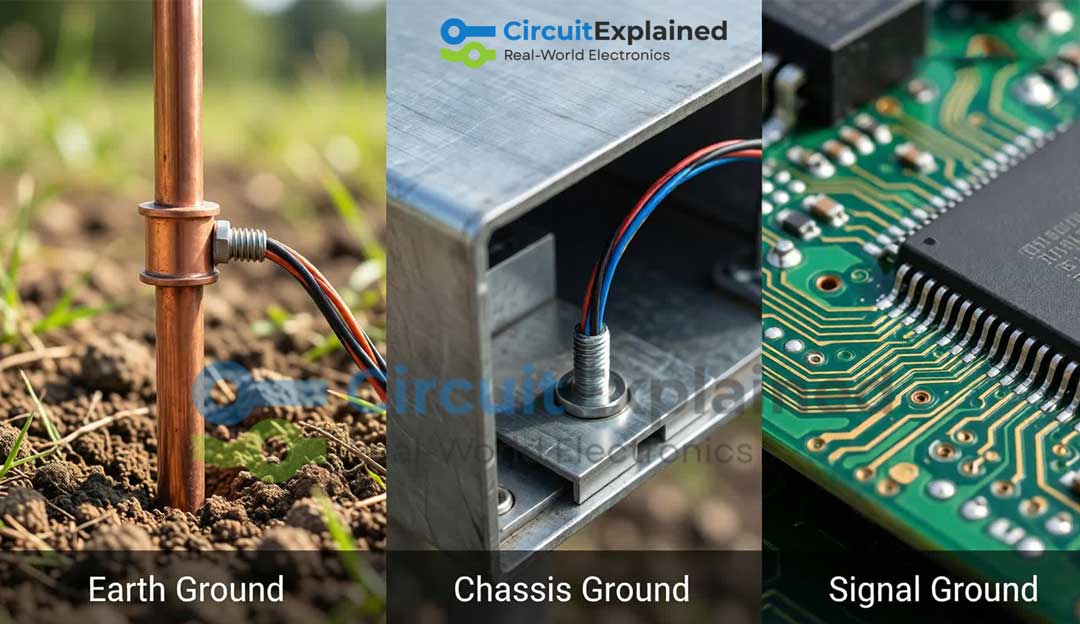
2. Earth Ground (Safety Ground)
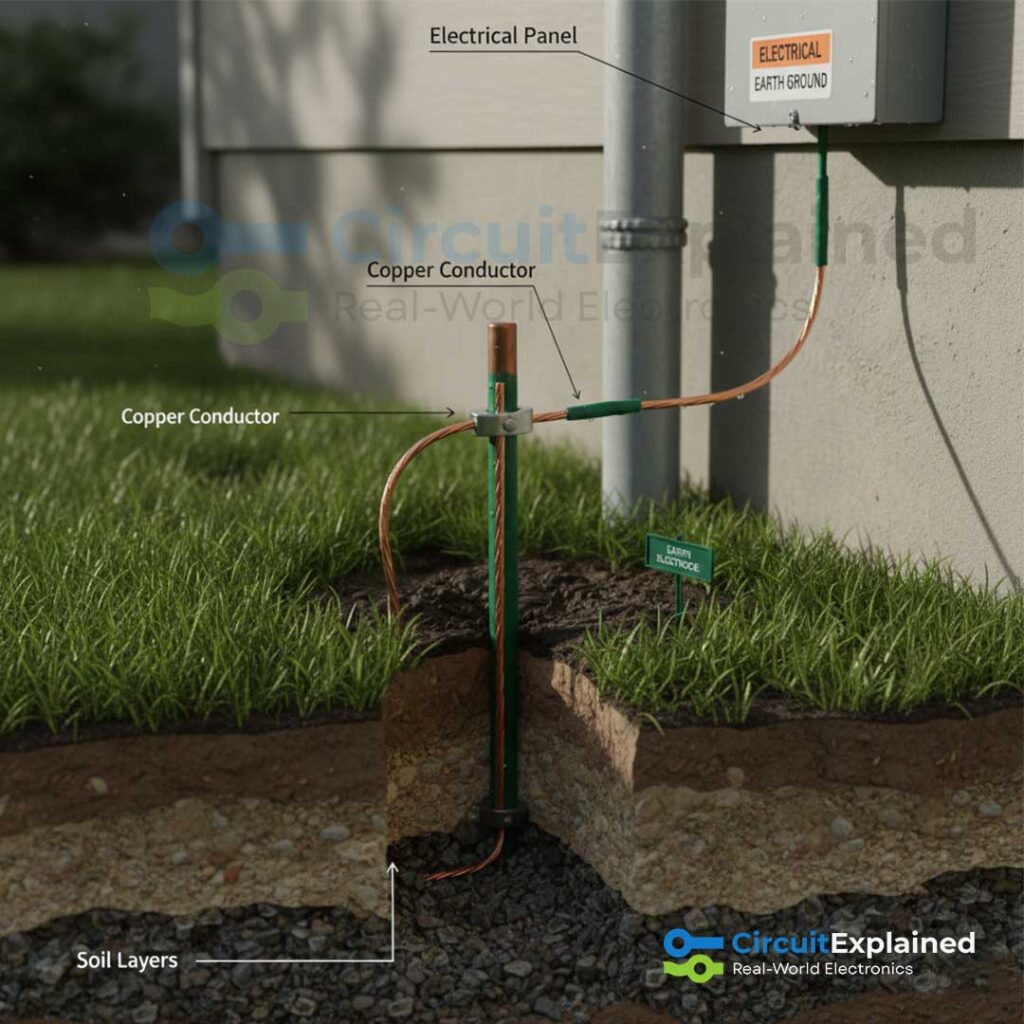
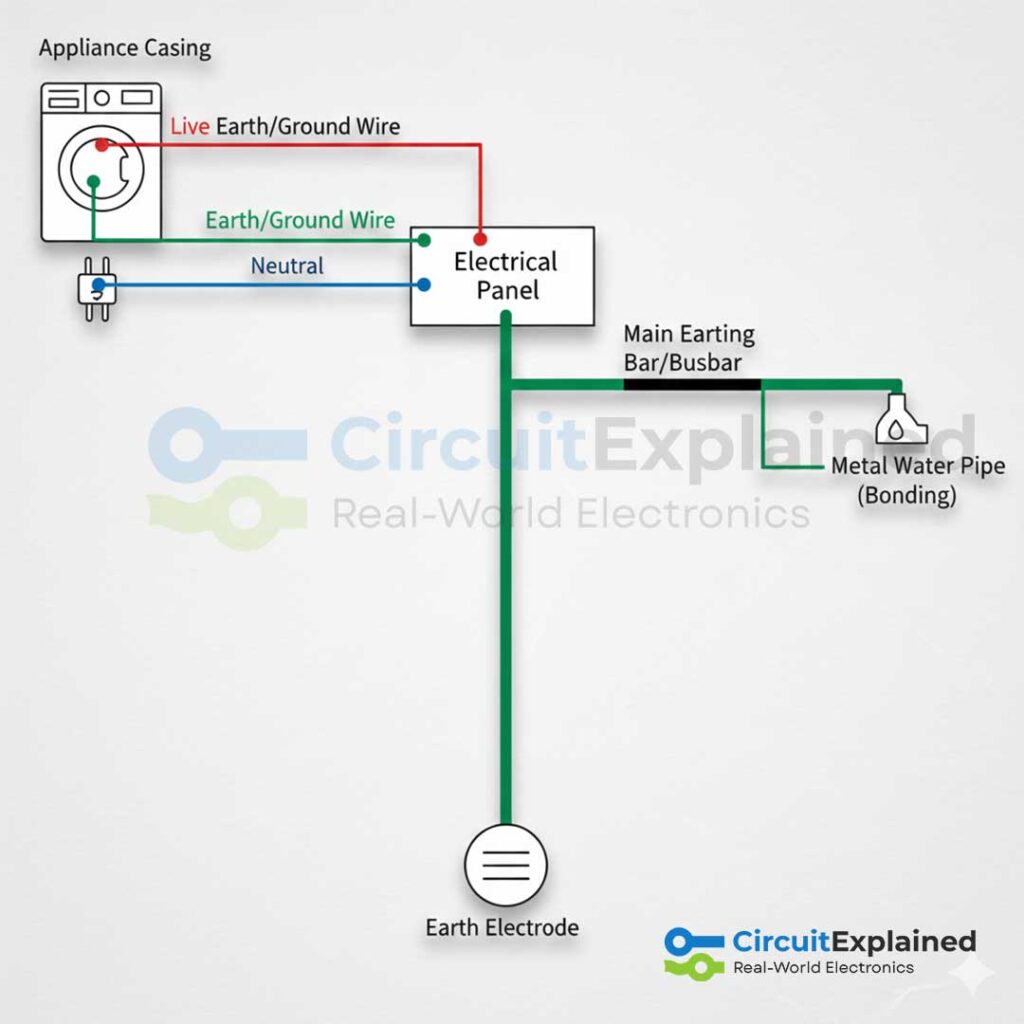
- Physically connected to the Earth.
- Used for safety.
- Found in power supplies, home wiring, and metal enclosures.
- Protects humans from electric shock.
- Not required for most hobby circuits.
3. Chassis Ground

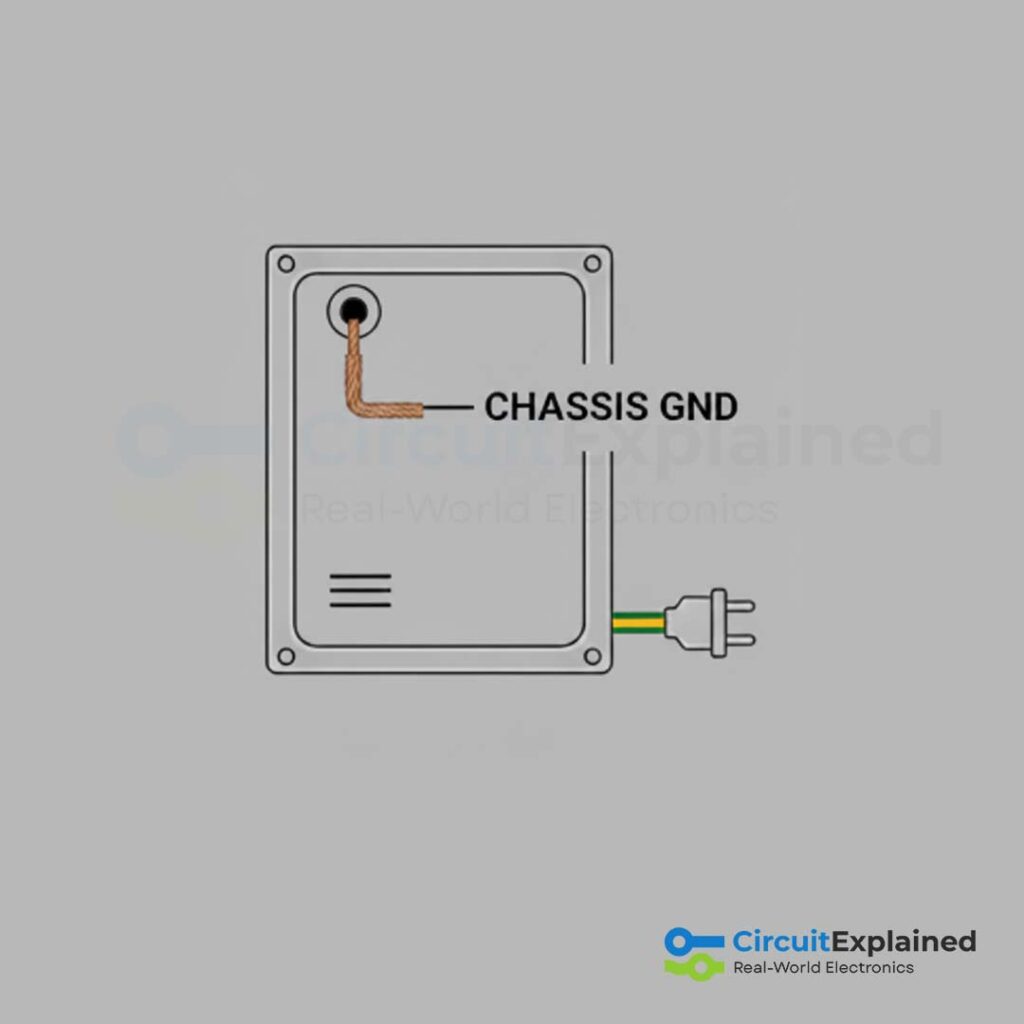
- Connected to a metal case or frame.
- Common in automotive and industrial electronics.
- Often tied to earth ground or circuit ground.
Big Misconception: “Current Goes to Ground”
This is wrong that the current goes to the ground, Correct idea: Current flows in a closed loop.
Electric current:
- Leaves the power source.
- Passes through components.
- Returns to the source and complete the circuit.
Ground is just the reference point we choose.
Why Circuits Need Ground at All
Ground helps:
- Measure voltage correctly.
- Keep signals stable.
- Reduce noise and increase circuit immunity.
- Allow multiple components to “agree” on different voltage levels.
Without a common ground, voltages become meaningless.
Ground in Microcontrollers (Arduino / ESP32)
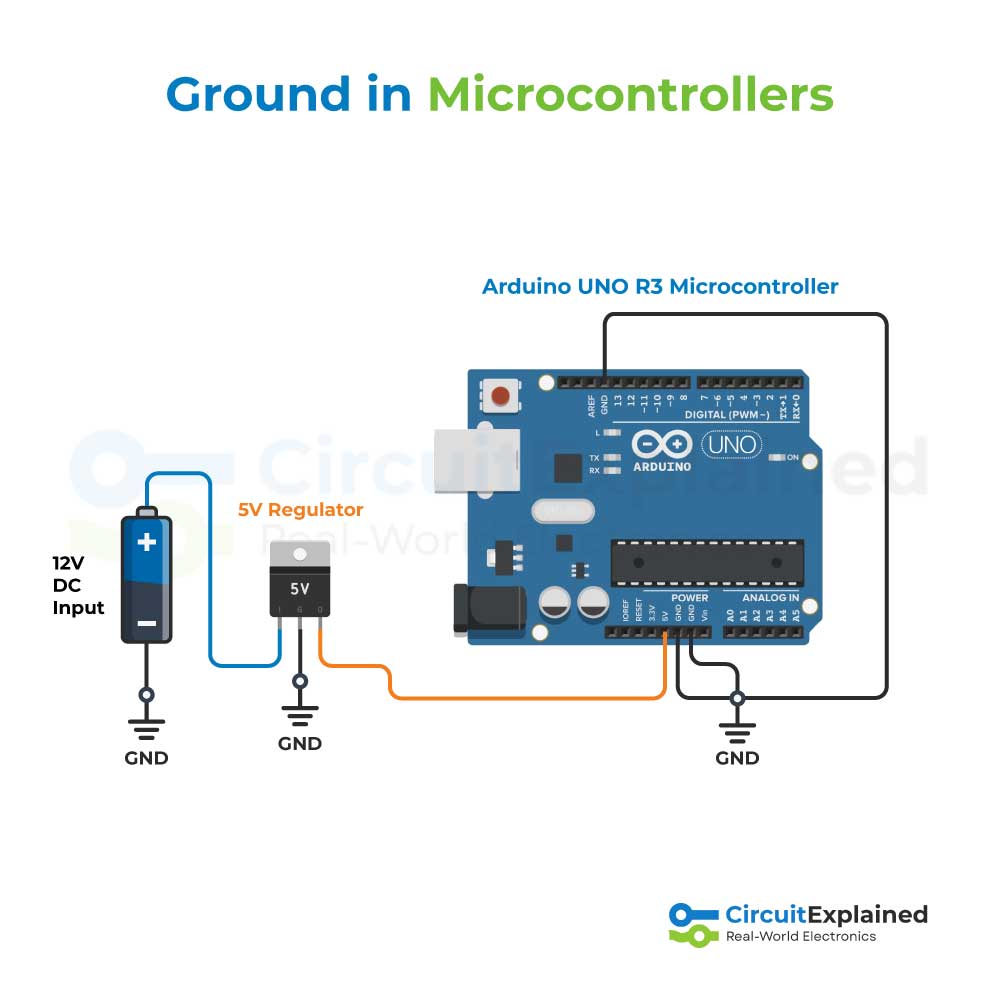
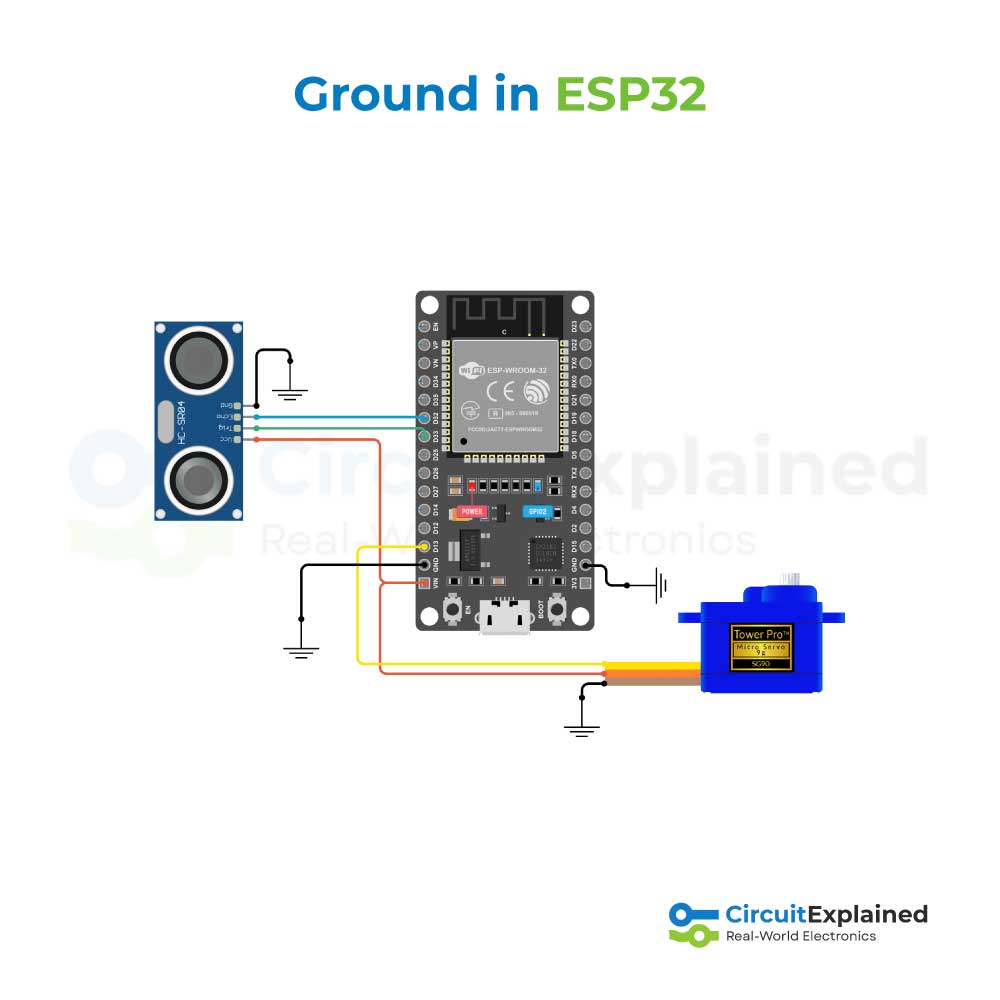
All devices must share the same ground:
- Sensors
- Displays
- Modules
If grounds are not connected, signals will not work correctly.
Simple Rule to Remember
Ground is not a place, it is a reference.
Sometimes it connects to Earth.
Most of the time, it does not.
Final Thoughts
Ground feels confusing because the name is misleading.
Once you understand that it’s just 0V reference, electronics becomes much easier.
If you master ground, you unlock:
- Cleaner circuits
- Fewer bugs
- Better designs
1 Comment