
Learn what a circuit is, how it works, and the basics of electronics. Step-by-step beginner-friendly guide to circuits and components.
Introduction
If you’re just starting in electronics, understanding circuits is the first and most important step. Everything from your smartphone to a simple flashlight relies on circuits to function.
At CircuitExplained.com, we believe electronics should be easy to understand and practical. In this guide, we’ll explain what a circuit is, how it works, and the essential components every beginner should know. By the end, you’ll be ready to build your first simple circuit and explore more advanced projects.
What is a Circuit?
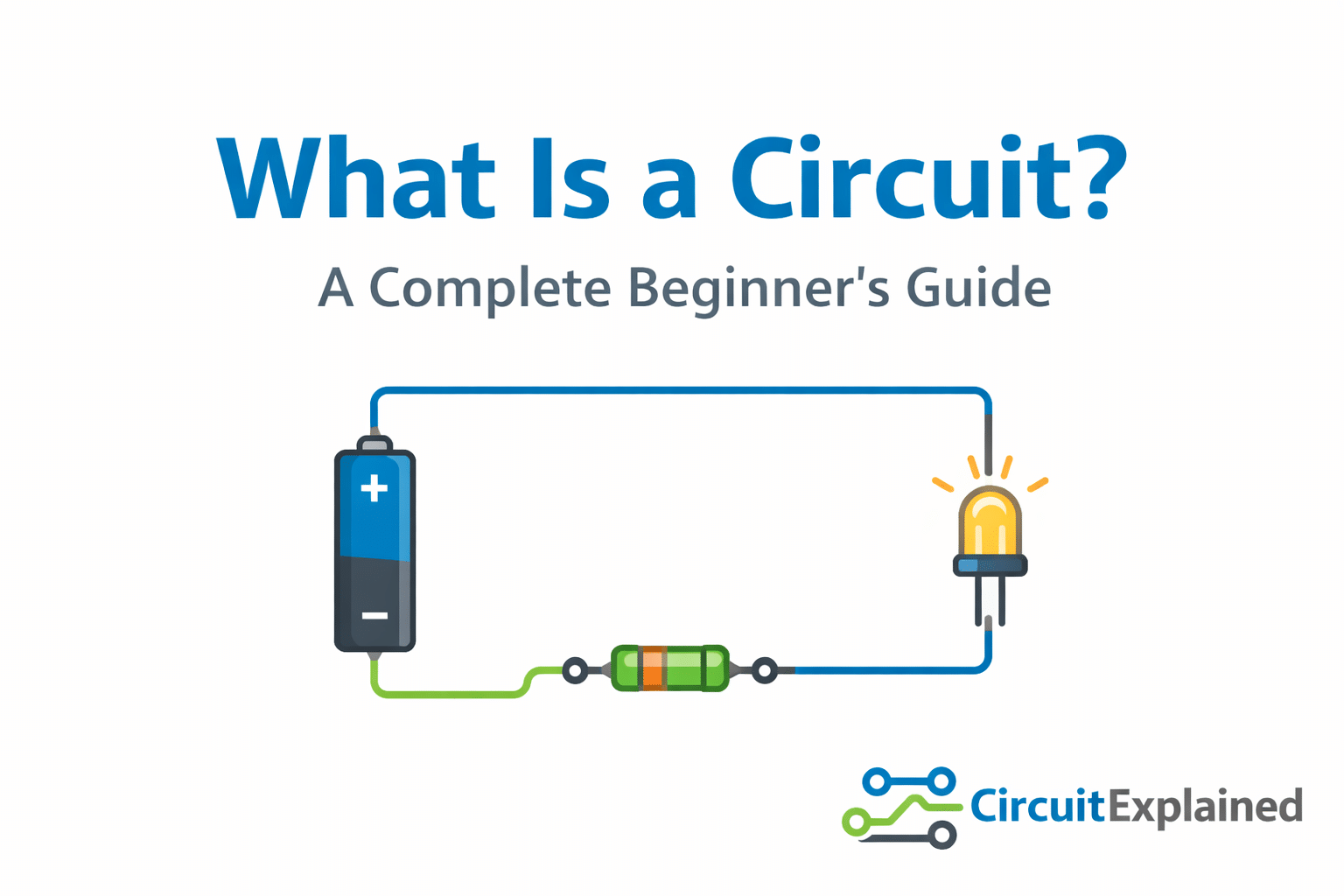
It is a path that allows electricity to flow. Without a complete path, electrons can’t move, and the device won’t work.
Real-world examples of circuits include:
- Flashlights
- LED string lights
- Smartphones and laptops
- Household appliances
A simple circuit consists of a power source, conductors (wires), and a load (like a light bulb or LED).
Type Of Circuits
1. Series Circuits
- All components are connected in one path.
- Current flows through each component sequentially.
- If one component fails, the entire circuit stops working.
Example: Old Christmas lights.
2. Parallel Circuits
- Components are connected in multiple paths.
- Current divides among the paths.
- If one component fails, others continue working.
Example: Home electrical wiring.
Basic Components of a Circuit
Understanding the components is key to building your own circuits:
| Component | Function |
|---|---|
| Battery / Power Source | Provides energy for the circuit |
| Resistor | Controls the current to prevent damage |
| Capacitor | Stores and releases energy when needed |
| LED / Load | Converts electricity into light or work |
| Wires / Connections | Provide the path for current to flow |
Tip: Start with a resistor + LED + battery to experiment safely.
How Current Flows
Electricity flows from the positive terminal to the negative terminal of the power source.
Key terms:
- Voltage (V): Electrical pressure that pushes current
- Current (I): Flow of electric charge
- Resistance (R): Opposition to current
Ohm’s Law:V=I×R
This simple formula helps you calculate the correct resistor value to protect LEDs and other components.
Real-World Examples of Circuits
- Flashlight: Battery + switch + bulb
- LED Blink (Arduino): Simple microcontroller circuit
- Household Outlet: Parallel circuit powering multiple devices
These examples show how circuits power everyday electronics.
Common Mistakes Beginners Make
- Forgetting LED polarity (positive and negative terminals)
- Loose or incorrect connections
- Using incorrect resistor values
- Overloading circuits with too much current
Pro Tip: Always double-check your wiring and start with small, safe circuits.
Conclusion
Circuits are the foundation of all electronics. Understanding them is the first step toward building your own projects, troubleshooting devices, and exploring advanced electronics.
Start by creating a simple LED circuit, and then gradually explore series, parallel, and more complex circuits.
Learn More on CircuitExplained
If you’re just starting out, these articles will help: